

RARE JUVENILE PLATYPUS ADMITTED TO BYRON BAY WILDLIFE HOSPITAL
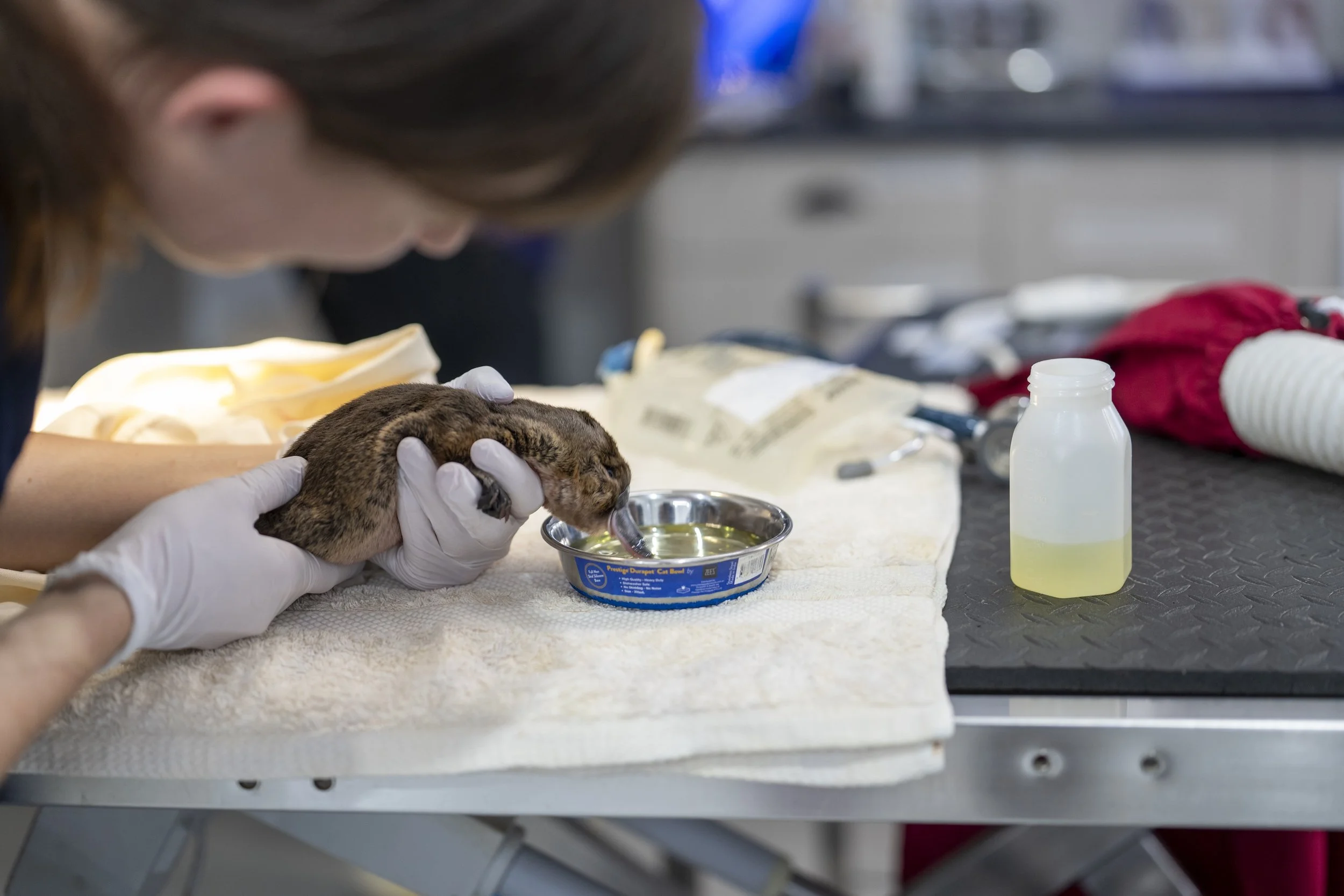
Dr Jana Schader treats the juvenile platypus at Byron Bay Wildlife Hospital. Photo: Craig Parry Photography
In a timely reminder of World Wetlands Day, a rare juvenile platypus has been admitted to Byron Bay Wildlife Hospital after being rescued from a river in north-eastern New South Wales over the weekend.
The platypus was found in the Upper Clarence region near Ewingar by a prospector who was fossicking in a river when the animal floated downstream in front of him. Observing that the platypus appeared weak, the man retrieved it and took it to a local wildlife rescuer from WIRES, who contacted Byron Bay Wildlife Hospital.
Byron Bay Wildlife Hospital chief executive Dr Stephen Van Mil collected the animal in the hospital’s recently acquired support vehicle, a troop carrier funded through public crowdfunding, and transported it to the facility, established in 2020 as the region's first all-species wildlife hospital.
The platypus was treated by Byron Bay Wildlife Hospital veterinarians Dr Jackie Reed and Dr Jana Schader.
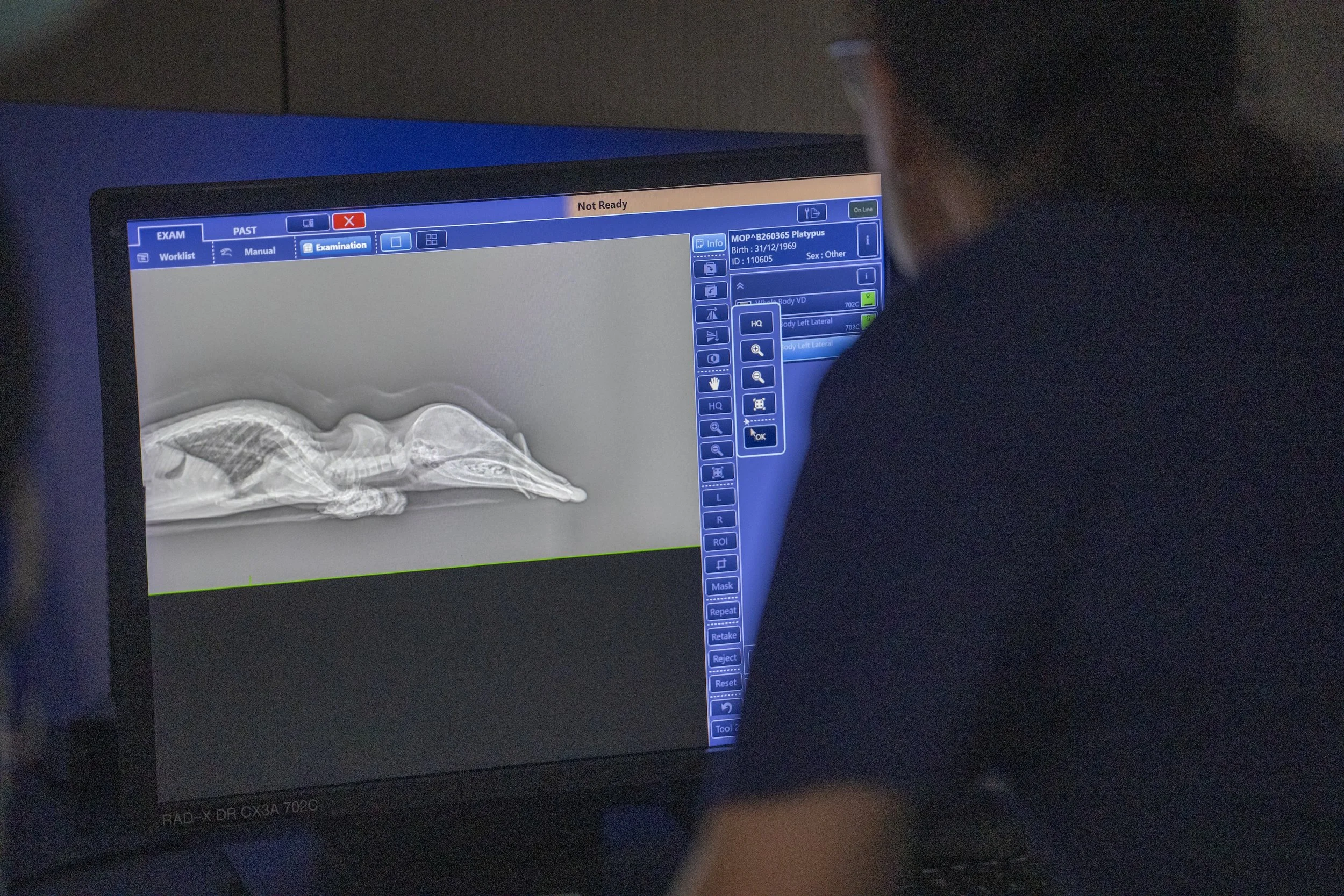
Dr Jackie Reed inspects x-ray imaging of the platypus patient. Photo Craig Parry Photography.
Platypus sightings are uncommon. The platypus is one of only two monotreme species in the world and typically avoids human contact. Byron Bay Wildlife Hospital’s veterinarians said that encounters with people often indicate illness or distress.
“We are so lucky to have such unique wildlife in Australia and to treat this platypus, a species both fragile and resilient was something very special.” said Dr Schader. “On World Wetlands Day, it’s a timely reminder of what is out there for us to preserve.”
“In over 11,000 patients admitted, this is the first platypus we’ve treated since our inception in 2020. It speaks to the skill and expertise in the unique physiology and anatomy of a diverse range of native Australian species.” said Dr Van Mil
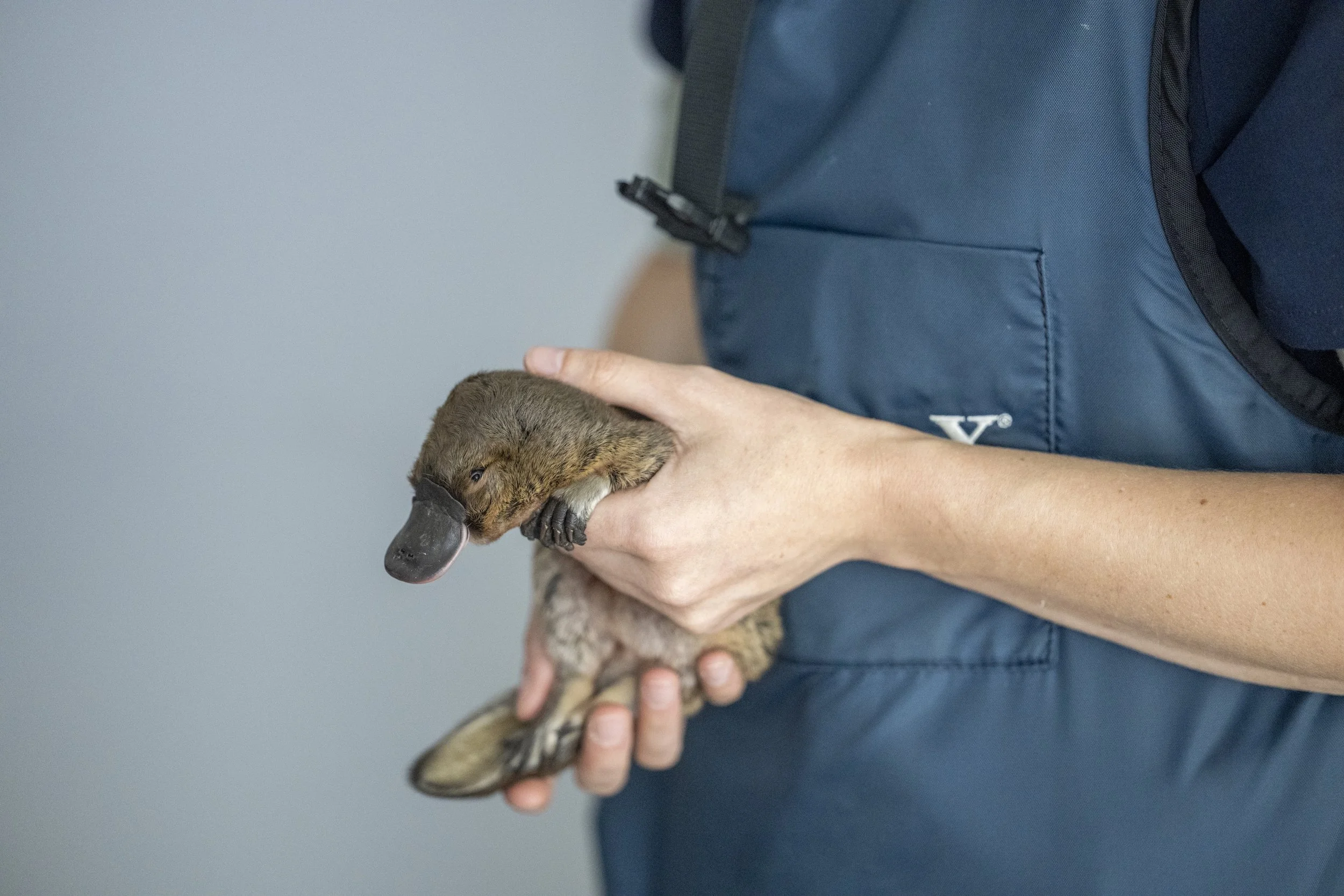
The platypus patient being prepared for X-ray imaging. Photo: Craig Parry Photography
The platypus has been transferred to the David Fleay Wildlife Park for after care with the intention of releasing it where it was found.
Wetlands are precious ecosystems for thousands of native species like the platypus. Wetlands are precious ecosystems that thousands of species call home. They provide critical breeding habitat, shelter, food and nutrients to adults and their offspring. Wetlands are vitally important for nutrient storage and filtration, mitigating climate change by storing carbon, and reducing flood risks to other areas.
To help us protect all life that call these precious and dwindling ecosystems home (including platypuses), we ask our community to:
🐢 Be a responsible, ethical fisher: use barbless hooks, don't cut the line if you snag it or catch something, use single hook equipment only (no double or treble hooks), do not use yabby traps, do not leave other traps unsupervised, and only fish for food.
🐦 Speak to your local councils and encourage restoration and protection of local wetlands.
👣 Stick to allocated tracks or footpaths, as wetland ecosystems are incredibly delicate and can become easily disturbed or destroyed through clearing and trampling.
🐕 Do not bring pets into National Parks or wetlands, as they can cause damage to natural ecosystems and harm wildlife, as well as carrying microbiomes in their waste that can be detrimental to native flora and fauna.
⚛️ Avoid chemical pesticides or artifical gardening products, which are carried in run-off and soil to wetlands and other ecosystems.
✂️ Cut the ring- before disposing of anything with a ring (e.g. hairbands, rubber bands, 6-pack holders), please cut all rings to ensure they do not become a life-threatening trap for wildlife.