

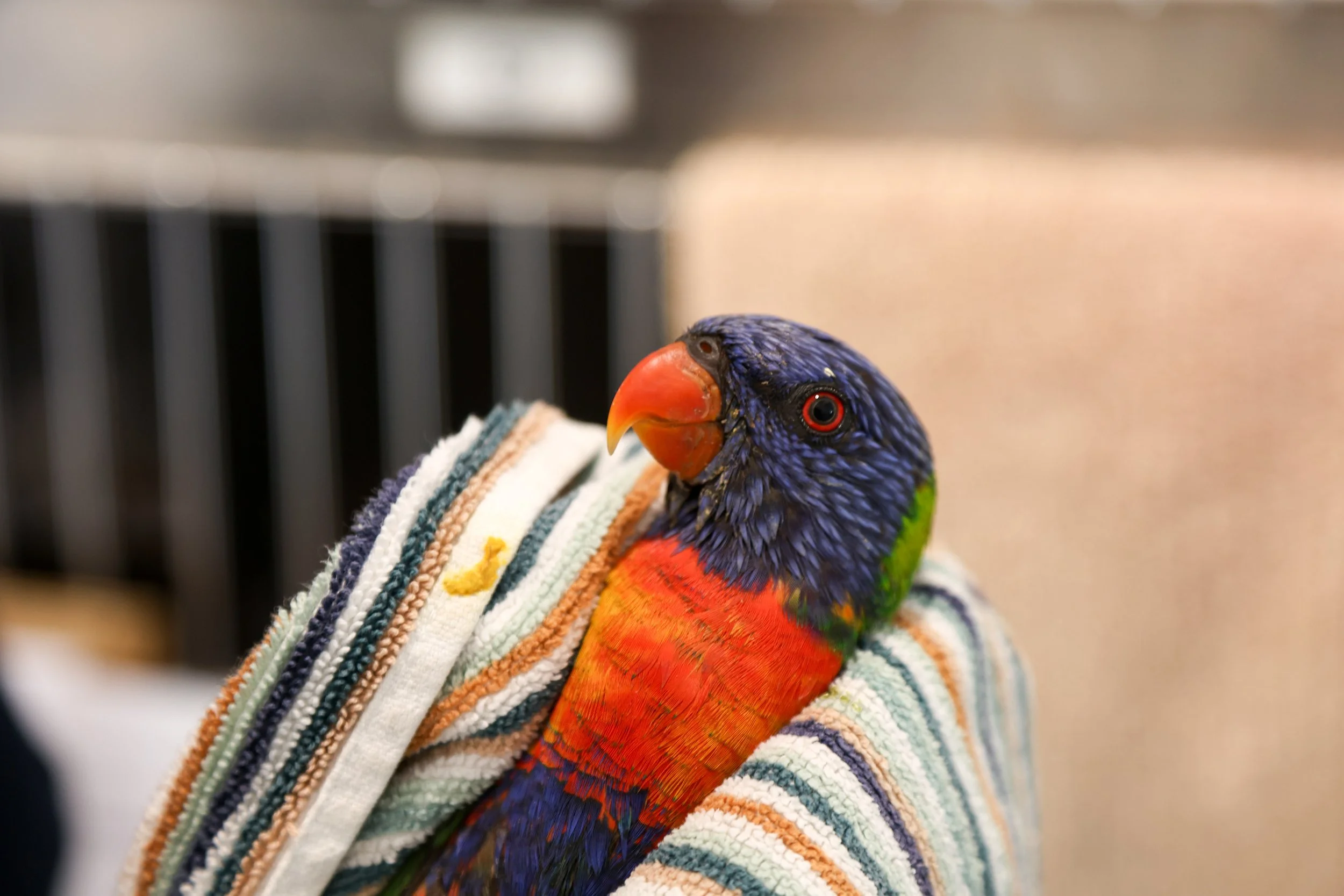
Rainbow lorikeets are usually hard to miss — a flash of colour overhead, a lively gathering in a flowering tree, a chorus that makes itself heard.
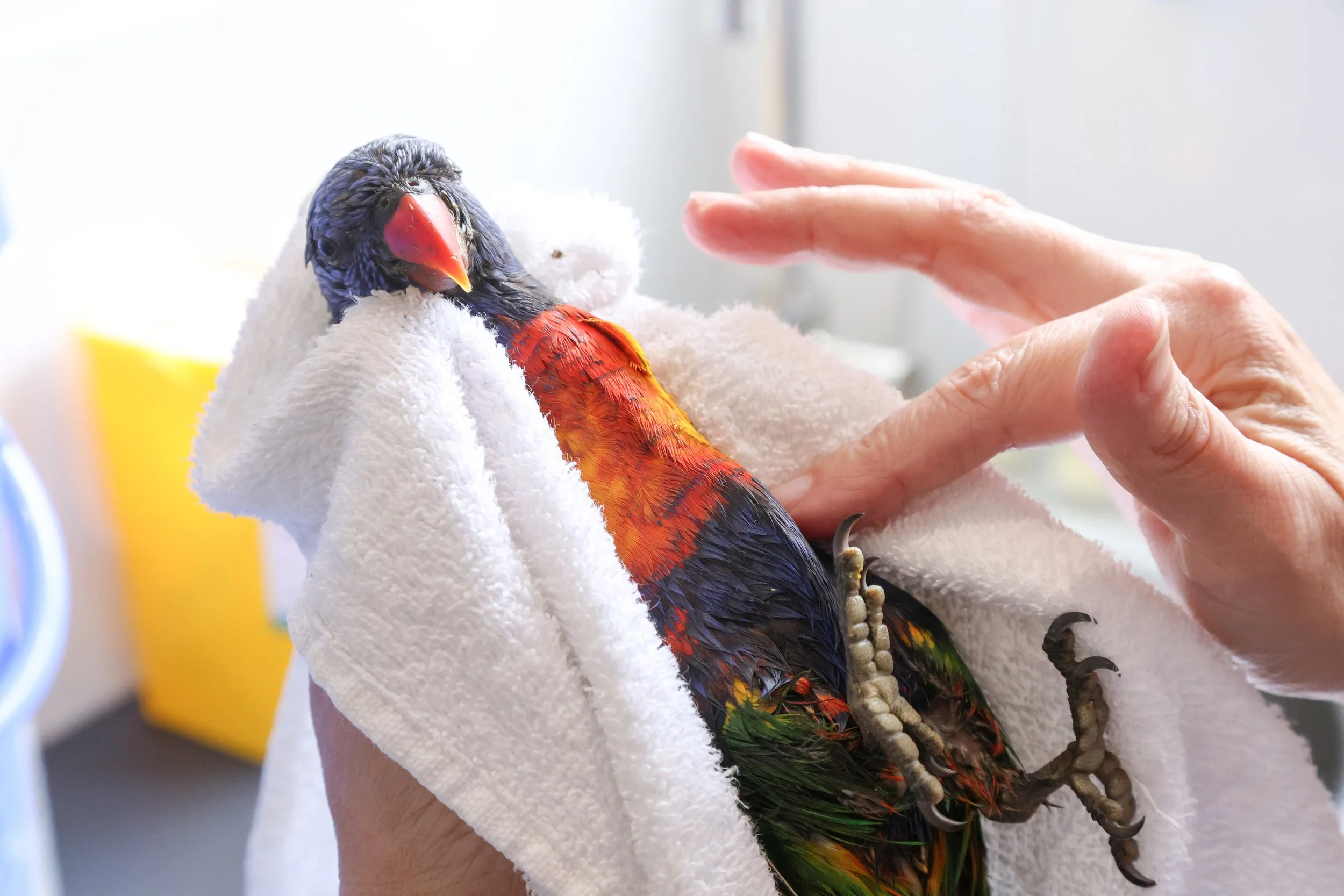
Right now, at Byron Bay Wildlife Hospital, we’re seeing many of these normally energetic birds needing help with Lorikeet Paralysis Syndrome (LPS).
For an affected lorikeet, the change can be profound. A bird that should be flying, climbing and feeding may find itself grounded, unable to escape danger or care for itself. Knowing the signs and seeking help promptly can give these birds a chance.
What is Lorikeet Paralysis Syndrome?
LPS is a condition that causes varying degrees of weakness and paralysis, primarily in rainbow lorikeets, although scaly-breasted lorikeets can also be affected. It occurs in northern NSW and south-east Queensland and typically follows a seasonal pattern, with cases most common during the warmer months.
The exact cause remains unknown. Researchers are investigating possible environmental toxins, including those associated with plants or fungi, but no specific cause has been confirmed.
Signs to look out for
A lorikeet with LPS may still be alert and aware of its surroundings, even when it cannot move normally. Signs can include:
Being unable to fly, often remaining on the ground when approached.
Wobbly or uncoordinated movement, including difficulty walking or hopping.
Weakness or paralysis in the legs or wings, making standing or perching difficult.
A change in voice, including a quieter or unusual call, or losing its familiar screech.
Difficulty swallowing or an inability to blink in more severe cases.
You don’t need to identify every symptom before asking for help. A lorikeet that cannot fly or move normally needs professional assessment. Other injuries and illnesses can cause similar signs, so a veterinary examination is important.
What should you do if you find a sick lorikeet?
Contact Byron Bay Wildlife Hospital on 1300 WILDLIFE (1300 945 354), a licensed wildlife rescue organisation or your local veterinarian for advice. The hospital team can guide you on the next steps.
While arranging help:
Keep pets and children away and avoid unnecessary handling.
Record the exact location where the bird was found.
Take a photograph or short video if you can do so without disturbing it.
If advised to contain or transport the bird, follow the rescuer’s instructions.
Do not offer food or water during transport, or attempt to syringe anything into its mouth. Affected birds may have difficulty swallowing and need professional care.
Can affected lorikeets recover?
There is hope. Many lorikeets can recover with appropriate supportive care, although the outcome depends on how severely they are affected. Recovery may take days to several weeks, with birds needing careful monitoring and support until they can feed, perch and fly again.
This care takes time, resources and collaboration between veterinary teams and wildlife rehabilitators. With many lorikeets currently arriving at Byron Bay Wildlife Hospital, community awareness is especially valuable.
If you notice a grounded lorikeet on your morning walk, in your garden or beside a road, please take a moment to seek advice. Your call could be the first step towards getting that bird the care it needs — and, where recovery is possible, back to its flock.