

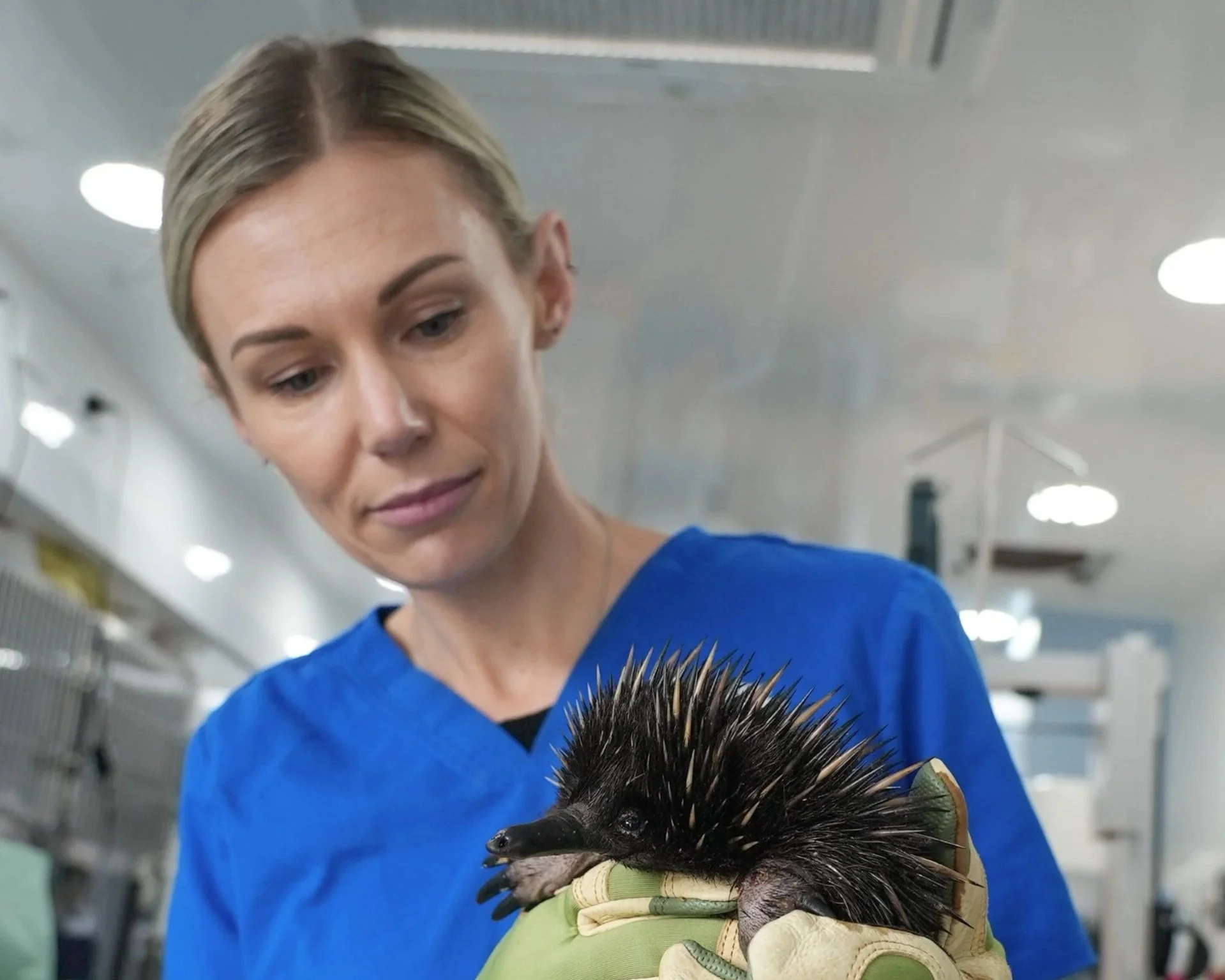
Chief Veterinary Officer Dr Bree Talbot with an echidna patient at Byron Bay Wildlife Hospital
Spring is just around the corner, and across the Northern Rivers our wildlife is becoming more active. We are fortunate to share this region with an extraordinary diversity of native animals. Echidnas, wallabies, bandicoots, possums and flying-foxes live alongside rainbow lorikeets, tawny frogmouths, waterbirds, water dragons, blue-tongue lizards and snakes – often much closer to our homes than we realise.
As temperatures rise, reptiles become increasingly active, with more lizards, turtles and snakes on the move. Wildlife is also more likely to be crossing roads, so slowing down and keeping an eye out, particularly around bushland and at dawn and dusk, can make a real difference. Spring also means babies. Young birds begin leaving their nests, while joeys and other juvenile wildlife become increasingly visible. But a baby animal on its own doesn’t necessarily need rescuing.
Fledgling birds may spend time on or close to the ground while learning to fly, with their parents still nearby. If you’re unsure whether a young animal needs help, observe from a safe distance and contact a wildlife rescue organisation or wildlife hospital for advice before intervening. We can make our backyards safer and more welcoming for wildlife too. Planting locally native trees, shrubs and flowering plants provides natural food and shelter, while dense vegetation, leaf litter, logs and rocks offer refuge for smaller species. Clean, shallow water in a safe, shaded location is another valuable resource.
Keeping cats contained, choosing wildlife-friendly alternatives to rodenticides and pesticides, and removing potential entanglement hazards can make our gardens safer. Rather than feeding wildlife, creating natural habitat allows animals to find the food and shelter they need while remaining wild.
At Byron Bay Wildlife Hospital, spring is one of our busiest times of year. By slowing down on our roads, creating wildlife-friendly gardens and knowing when to seek help, we can all play a part in protecting the remarkable animals that share the Northern Rivers with us.
If you find a native animal that is injured, unwell or you are unsure whether it needs help, call Byron Bay Wildlife Hospital on 1300 WILDLIFE (1300 945 354) for advice. After hours you can call one of the amazing wildlife rescue organisations in our region. Click here for contact details
*This article was first published in the Byron Echo on 3 September 2026